
 Hot Features



 Premium






 Trade smarter, not harder: Unleash your inner pro with our toolkit and live discussions.


At some point in every trader’s journey, a quiet moment arrives—not on the chart, but in the mind.
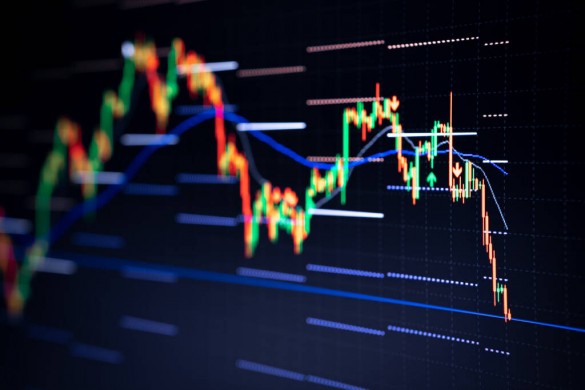
Price approaches your stop. The setup you trusted begins to unravel. And suddenly, logic gives way to inner dialogue:
“Maybe it’s just a shakeout.”
“Let me give it one more candle.”
“This move feels emotional, not real.”
That moment is not about technical analysis.
It is about discipline under pressure.
And how you respond to it will shape your future in the markets.
When Trading Turns Psychological
What happens at the stop level mirrors a deeply human response to loss. Psychologists call it bargaining—the stage where the mind tries to negotiate reality to avoid discomfort.
In trading, bargaining sounds analytical, but it isn’t. It disguises fear as patience and hope as strategy. The trader begins searching for reasons to delay action, not because the plan changed, but because reality hurts.
Yet the market does not negotiate. It only moves.
A Stop Is a Commitment, Not a Forecast
Many traders treat stops as suggestions—flexible lines that can be adjusted when emotions rise. But this misunderstanding is costly.
A stop-loss is not a prediction of where the price will go next.
It is a commitment you made when your thinking was calm and objective.
You decided, in advance, how much uncertainty you were willing to tolerate. When that threshold is crossed, the decision has already been made.
The only question left is whether you will honor it.
Why the Stop Must Be Absolute
The most dangerous moment in trading is not entry—it is exit.
When a stop is hit, emotional bias is at its peak. Fear of loss, fear of being wrong, and fear of missing a reversal all collide at once. This is precisely why stops exist: to remove discretion when discretion becomes unreliable.
The rule is simple and unforgiving:
If the stop is hit, the trade is over.
No analysis. No confirmation. No exceptions.
Execution comes first. Reflection comes later.
The Trap of “Just One More Confirmation”
In moments of stress, traders often delay exits under the banner of confirmation:
“I’ll wait for volume.”
“Let’s see if structure truly breaks.”
“Maybe this is only sentiment.”
But confirmation after the stop is breached is not discipline—it is negotiation. The moment you wait beyond your predefined risk level, the stop loses its meaning.
At that point, hope replaces structure, and hope has no edge.
Partial Exits and Emotional Comfort
Selling only part of a losing position can feel mature and controlled. In reality, unless it is a clearly tested rule, it often introduces inconsistency.
Partial exits distort risk, cloud performance tracking, and quietly invite emotional decision-making back into the process. They soothe discomfort, but they weaken systems.
Trading systems survive on clarity, not comfort.
No Stop Is Perfect—Discipline Is the Point
Every trader has experienced the sting of being stopped out just before the price reverses. It feels unfair. It feels personal.
But this is not failure—it is the cost of protection.

Trading is a game of probabilities, not guarantees. Your job is not to avoid every incorrect exit but to avoid the exits that end your career.
Stops are not about being right.
They are about staying solvent.
What the Market Ultimately Tests
The market does not care how intelligent you are, how hard you worked, or how badly you want a trade to succeed. It does not reward effort or intention.
The test stops something far simpler—and far harder:
Your willingness to accept reality without argument.
In life, progress begins with acceptance.
In trading, longevity does too.
When the stop is hit, the correct response is not analysis or hope—it is honesty.
The trader who exits cleanly protects capital, emotional balance, and the integrity of their system.
And in the long run, that integrity is the only edge that truly compounds.
Learn from market wizards: Books to take your trading to the next level